Thursday, August 7, 2014

Pavement Alters You Mind

Robert Schneider, a professor of urban planning at the University of Wisconsin, and Rebecca Sanders, a post-doctoral researcher at UC Berkeley's Safe TREC interviewed hundreds of professionals in public health, planning and engineering, and safe streets advocacy around the country and uncovered three main factors that seem to determine if a driver will yield to a pedestrian at an intersection without a traffic signal: Street width, pedestrian volume, and the part of the US where you happen to be. All three of these factors are interesting, but the one most directly related to bike and pedestrian safety is street width. The design of traffic infrastructure directly affects both our perceptions and the behavior we expect from others and from ourselves: In short, pavement alters your mind.

Take a look at the walkability map for our old hometown, Berkeley, and you'll notice a lot of green. This is where the city is walkable: Good sidewalks, crosswalks, housing and density of neighborhood shops all contribute to walkability. If you live in the green areas you probably take the ease of walking for granted and might not even know that Berkeley has a walkability score of 79 out of 100. Those areas of red are less walkable mainly due to the steep terrain of the Berkeley Hills.


There's a lot to like about our new neighborhood in San Luis Obispo (SLO), an area referred to as Downtown South. Many errands can be accomplished on foot or by bike, there is a mix of single-family homes and apartments, most of the housing is modest. Our neighbors seem to have low-stress lives, there's seldom aggressive driving behavior. SLO has a reputation for valuing a SLOw way of life, but it has an unremarkable walkability score of 51 out of 100. That very small area of green just happens to be the part of town to which we gravitated. Unfortunately, there are parts of SLO where the speed of traffic and the lack of infrastructure are make things unfriendly to pedestrians.


We think we're lucky to be living in a walkable area, but it seems some folks do not like densely populated areas at all. A Pew Research study uncovered a strong correlation between liberal or conservative values and the type of neighborhood you in which want or choose to live. Quoting from the study:

"It is an enduring stereotype – conservatives prefer suburban McMansions while liberals like urban enclaves – but one that is grounded in reality."

The older part of town is the green area while the newer parts of SLO is mostly optimized for cars. We've tried biking through the non-green areas shown on that map of SLO. It ain't pretty. The city prides itself on being "bike friendly" and there are bike lanes in most parts of town, but my wife finds many of the shopping areas just too dangerous to cycle: Multi-lane roads, speed limits of 40 to 50 miles per hour, numerous opportunities for vehicles to turn right, bike lanes that end unexpectedly, and nothing but a stripe of white paint on the pavement to separate a cyclist from a fast moving car. I feel safer cycling through most parts of Berkeley and gritty downtown Oakland. My wife is right, the commercial shopping areas of SLO are dangerous.

For pedestrians, SLO has plenty of crosswalks near schools and most city parks. In other areas of the city, crosswalks are strangely absent. One intersection where the lack of a crosswalk is particularly striking is where King Street intersects with South Street (which also happens to be California State Highway 227).
  • Neighborhood residents need to cross South Street to access Meadow Park
  • The speed limit on South Street is 40 MPH
  • The road has a median, parking on each side, and a designated bike lane
  • There are no crosswalks painted where three neighborhood streets intersect this state highway
  • Several years ago, a child was killed on halloween night while crossing this intersection

In short, South Street looks like a highway and so it's natural for drivers use it as a freeway: They seldom yield to pedestrians trying to cross or in the process of crossing the street, even though they are required to yield by the California Vehicle Code. No one expects to see pedestrians on a freeway because that is where we've all be trained to think "Cars are King."

CalTrans and the City of SLO arranged to do a traffic study of these intersections and concluded they didn't meet the necessary thresholds required to justify crosswalk paint on the pavement or signs to alert drivers to the possible presence of pedestrians at each intersection. There are just two signs at each end of South Street that warn drivers of pedestrians crossing in the next 3/4 miles. These traffic studies were done over eight years ago.

Another problem area for pedestrians is Broad Street from South Street eastward to the entrance to the San Luis Obispo county airport. This part of Broad Street has four lanes, a painted medial/turn lane, and bike lanes. It also has a speed limit of 45 to 40 MPH and looks like a highway. Woe unto him or her who tries to cross this four-lane street. I've witnessed pedestrians literally trapped in the median, trying to cross, and virtually no drivers yielding right-of-way. 

The problem at work here is that if a road looks like a highway, has near-highway speeds, and no crosswalks, then pedestrians must not matter. And the lack of protected bike lanes in heavily trafficked commercial shopping areas sends a similar message: Leave you bike at home, get in your car and drive. The SLO life is a great ideal, but the city's traffic engineers have some work to do if that ideal is to survive and grow. 


Sunday, July 13, 2014

Mind Yer Topknot

People are talking lately about bike share programs, helmets (or lack there of) and bike safety. Folks who don't like bikes clogging up their streets and who believe that cars are king may side with folks like Wall Street Journal board member Dorothy Rabinowitz, who last year blasted NYC's CitiBike program with some pretty bizarre rhetoric. More recently, a Washington Post article erroneously claimed that cyclist head injuries have increased in cities that implement bike share programs when the study they cited actually found something different: Bike share programs lead to an overall reduction in bicycling injuries, but the proportion of injuries involving head trauma increased slightly. So let's get this out of the way: Bike share programs reduce bike accidents overall. The Washington Post recently edited the title of that article to be more accurate, but the debate on helmet-less cyclists continues to simmer.

When my wife and I used a bike share in Boston two summers ago, we solved the helmet issue by visiting a local bike shop and purchasing two low-cost helmets. At the end of our trip, we shipped the helmets back home to keep as spares. We were very much aware that the lack of helmets in a bike share rental leads to a subtle pressure to simply ride without a helmet. If you're a tourist, all sorts of rationalizations spring easily to mind: "I'm on vacation, lighten up!" "What are the odds that I'll be in an accident?" "I'll be extra careful." "People in Europe ride without a helmet all the time."

I'd like to think the main reason we chose to buy helmets is that I'm good at recognizing and managing risk. As a pilot and flight instructor, god knows I've had plenty of opportunities to learn about risk management and one trait I see in a lot of pilots is the inability, the lack of imagination if you will, to recognize hazards and risks. Another trait I see is people who recognize a hazard or risk, but rationalize it away with optimistic, magical thinking: Keep yourself from thinking about potential bad consequences, think good thoughts, and nothing bad will happen.

If you ride a bike in the US, your odds of having a collision with a car or truck are an order of magnitude greater than if you ride a bike in Europe. There are many possible explanations for the greater risk in the US, but the main reasons seem to be that there are fewer people riding bikes in the US, traffic laws often do not adequately protect cyclists, and when cyclist are injured in a collision the driver of the motor vehicle is often not held accountable.

Based on a sampling of other Washington Post articles, it would seem they have a bias against riding a bike without a helmet. I tend to agree with that position, but that doesn't justify skewing an article so much that it ends up misrepresenting the facts.

Thursday, February 20, 2014

Car, Bike & Pedestrian Safety: The Common Denominator

I asked a neighbor who works in bio-tech if he knew Susan Watson, the 62 year-old researcher who was recently struck and killed by a big rig truck at 5th and Market in Oakland while riding her bike home from work. He works in the industry, but didn't know her. But mentioning her death sparked a discussion about the responsibilities of cyclists, drivers, and pedestrians. Standing on the sidewalk in front of his house, my neighbor made two interesting assertions: Bicyclists never obey traffic regulations and if cyclists want safer roads, they should be taxed. Two fascinating ideas that indicate just how far market values have penetrated our everyday view of life, ethics and morality (a topic explored in depth by Michael Sandel).

I was about to respond with "No one obeys the rules of the road any more ..." when it occurred to me: The unifying element in this discussion about car, pedestrian, and bike safety is obvious. It doesn't really matter what sort of vehicle a person is operating, more and more of us are doing whatever we please: California stop, Idaho stop, texting, talking on their cellphone without a hands-free device, applying make-up, eating, reading, and so on. Pedestrians make risky choices, too: Walking against the light, jay walking, blundering into the street while texting, talking on their cellphone, reading and so on. The unifying element is us, We the People, aka human beings.

If dividing the world into equal parts crazy drivers, crazy cyclists, and crazy pedestrians doesn't move the debate forward, perhaps asking why people engage in risky behavior will add some clarity. One factor in risky behavior is what those in aviation refer to as external pressures and most of us have plenty of pressure in our lives. One good example? Step outside my front door between 7:45am and 8:05am on a school day: Stressed out parents driving their kids to the school down the block doing all the things they know they shouldn't do: They speed, cut off other drivers, fail to give pedestrians in a crosswalk right-of-way, and they put those few parents and kids who cycle to school at significant risk. Hell may have no fury like an angry parent, but it's not just parents who are stressed out.

All of us are going too fast and it's clear we are pushing the limits of our primitive neurological abilities. Most of us are in denial about this. We try to squeeze too much into the available time, we work long hours, and we don't sleep enough. These factors leave us cognitively impaired. And consider that research indicates chronic stress can cause mental illness and you have an even more complete, albeit sobering picture. So we think we're smart, but we make poor decisions. We think we have lightning fast reaction time, but we miss important events due to distractions. And we fail to recognize the hazards that our impairment brings to something as simple as trying to parallel park or crossing the street to a catch the bus.

We know that trying to reason with a stressed out driver, cyclist, or pedestrian doesn't work. You have to wait until they've calmed down, the adrenaline has subsided, and they have collected their wits. Even then, it's difficult to get most Americans to do something we should all be better at, given the number of errors we make every day: Admit our mistakes and apologize. We could also do a better job of respecting the lives of those around us, whether they were in a car, on a bike, or traveling on foot.

Thursday, February 13, 2014

Carrying things on a Bike, on a Bridge


If you want proof that engineers and designers who come up with bike routes are often not bike savvy, consider that 2nd Street is a designated bike route through Oakland's Jack London Square: It cuts right through the wholesale produce market, there are stop signs at virtually every intersection, and the street is lined or blocked with forklifts and delivery trucks. Even when a bike route is through a quiet residential neighborhood, what's with all the stop signs? The idea behind biking is to keep your momentum going, not to be forced to stop and start dozens of times. That's why I avoid designated bike routes and boulevards due to the greater amount of traffic and the preponderance of stop signs that seem to crop up at every intersection.

With the early part of today free, I spent time running errands and doing laundry before cycling to Sweet Maria's to pick up some green coffee. I threw one pannier on the rack and began winding my way through the back streets of Berkeley and Oakland. I won't tell you the route I took since, frankly, doing so might increase the number of bikes on my little bit of asphalt heaven. So stick to the bike lanes and the main thoroughfares or stay in your car and drive on the freeways, nothing to see here, move along ...


With three pounds of green beans loaded, I lamented the fact I'd be driving to the airport later. Since I'd be sitting in a car (undoubtedly in traffic), why not take the long way home on this bike ride? So I rode 7th Street to Maritime and cycled the eastern span of the Bay Bridge. I've cycled the bridge a half dozen times or so, but each time there seems to be something interesting going on with the deconstruction of the old cantilever section. This day was near perfect as the path was mostly empty. If you haven't cycled the bridge and gotten a close look at the old span, I suggest you do so before it's gone. At the rate they are going, it won't be long before the old bridge is history. And once the old span is gone, work will begin on completing the bridge path to Yerba Buena/Treasure Island.


Friday, December 27, 2013

Searching for Fred

KRAMER: Well my swimming pool problems are solved. I just found myself miles and miles of open lanes.

JERRY: What is that smell?

KRAMER: That's East River.

JERRY: You're swimming in the East River? The most heavily trafficked, overly contaminated waterway on the eastern seaboard?

KRAMER: Technically Norfok has more gross tonnage.

JERRY: How could you swim in that water?

KRAMER: I saw a couple of other guys out there.

JERRY: Swimming?

KRAMER: Floating, they weren't moving much, but they were out there.

Arriving at work the other day, a coworker approached me, gave my commuting bike the once over and said something like: "Look at this bike. You are so 'Fred!'" Having not heard this descriptive term, I asked for a definition. He provided his interpretation of "Fred" as a cycling term. I decided to dig deeper. What I discovered is that there are at least three competing definitions for "Fred" commonly used by cyclists.


  1. A neophyte, inexperienced, or bumbling cyclist
  2. A poser who buys expensive, state-of-the-art cycling gear, but is more interested in being seen that actually riding
  3. A utilitarian cyclist who outfits their bike and themselves in a way that is at once practical, yet unstylish to serious racing cyclists


To his credit, my coworker said he believes that there's a little bit of Fred in each of us. Given the variety of definitions for "Fred," I'd say that's a safe conclusion. The category I identify with most would be #3 because at this stage in my cycling life, I'm all about commuting efficiency. This wasn't always the case.

Years ago I purchased a Vitus 979 aluminum bicycle frame. At the time it was pretty much state-of-the-art. I outfitted that frame with Campagnolo components, a lightweight drive chain, very light wheels, pretty damn narrow tires, and the first generation Profile aero bars. I was too cool for school. When I used this bike to commute from my apartment on the peninsula to Santa Clara, I liked to ride fast. A coworker at the time decided to buy a bike with the goal of making it even lighter than my Vitus. He gradually bought more and more lightweight components, a seat with titanium rails, tubular tires, you name it. Yet with each lighter component he put on his bike, his ride became even heavier when compared to the Vitus. Not sure how that could have been, but I swear it was true.

Fast-forward 25 years, bike technology has changed in big ways and my priorities have shifted, too. Instead of lightweight, competition, and speed, I'm more biased toward durability and reliability. Instead of weighing in at less than 19 pounds (8.6 kg), my commuter weighs in around 34 pounds (15.4 kg). By the time I've loaded on the panniers, the whole production tips the scales around 45 pounds (20.4 kg). Okay, I admit I still get the urge to chase down younger riders on fixies and give them a run for their money.

The biggest improvement in the past two decades would have to be lighting systems. I had one of the original NightSun headlights and it was pretty awesome back in the day. The LED lighting available now is significantly more advanced both in lumen output and battery life. I wear a helmet, as I did in the old days. And brightly colored clothing, much to the amusement of the hip, ninja cyclists I encounter each day and night that I ride. So did I used to be cool and now I'm a Fred, or is it the other way around? Beats me ...

Near as I can tell, the main reason to use a term like "Fred" (or "Doris" for female riders) would seem to be to differentiate one group of cyclists as being better than or above the rest. The way I look at it, no matter how fashionable, unfashionable, or individualistic you may or may not be, the important thing is that you are on your bike and you are out there.

Tuesday, December 24, 2013

Milestones and Changes

Somewhere on Adeline Street, between San Pablo Avenue and 12th Street, it happened. I completed my 6000th mile of cycling for 2013. My goal was to see how much commuting I could accomplish with my bike as opposed to using a car and to reduce my CO2e contribution to the Earth's atmosphere. Based on previous research,  I calculate my cycling contributed 445 pounds (202 kg) of carbon dioxide. Driving those 6000 miles in a car would have not only been less fun, it would have contributed 5,714 pounds (2592 kg) of carbon dioxide. Keeping 5270 pounds (2390 kg) of carbon dioxide out of the atmosphere is, well, ... a start.

I didn't have any students at KOAK today, but needed to go there anyway to pick up some cycling gear I'd left behind when I flatted the other night. A beautiful day, blue skies as far as the eye could see, calm winds, warm temps, and the San Francisco Bay waters were mostly still.  On my way home today, I decided to take the long way and ride the eastern span of the Bay Bridge. This was my sixth trip across the bridge and even though it was Christmas Eve day, there were fewer pedestrians and cyclists than expected.

Construction on the new bike/ped path approach seems to be progressing
Mist on the water
It had been over a month since I last rode the bridge and this time I saw obvious signs of the slow, methodical demolition of the old cantilever span. If you haven't made time to ride or walk the east span and you want to see the old bridge, you still have time.

Upper deck being methodically removed, bracing added ...


A section close to the new span, debris shield installed ....
Once the old cantilever section has been removed, completion of the ped/bike path to meet Treasure Island will begin. That's currently slated to be completed sometime in 2015.

All these changes and milestones got me to thinking about next year. What should my CO2e goals be for 2014? I haven't finalized them yet, but one goal is to sell one of our cars. I'm biking so much that eliminating one car wouldn't be a hardship. Quite the opposite, it would save us money on insurance, license/registration, fuel and maintenance. Another goal would be to log more miles and while that is possible it will require thoughtful discipline: Less chasing down and dropping youngsters on fixies, a slower and more efficient riding speed, continued emphasis on riding safely, staying injury free, and avoiding illness. Perhaps 7000 miles of cycling for 2014 is achievable, but the main goal is to continue to keep my CO2e down and set an example for others: You can drive less, get more exercise more (walk or bike), be healthier and happier, and generate less CO2e to boot. Think about it ...

Sunday, December 1, 2013

Realizing Your Potential

With a long day ahead and few lunch choices near the airport, I made a sandwich detour. The woman behind the counter saw the cycling garb and asked where I had started and where I was headed. She was shocked, thinking it impossible or impractical to ride 16 miles to work in the morning and 16 miles home in the evening. I offered that I hadn't jumped into riding that sort of mileage, I eased into it. She claimed she could never ride a bike that far and I reminded her that each of us is capable of more than we realize.

Reaching the end of the 2013 and having completed my 56th lap around the sun, I find myself above my goal of 4500 cycling miles for the year. I've upped that goal to 6000 miles and with just under 5600 miles and a few weeks left to log the remaining 400 miles, I stopped to consider how far I'd come. With age comes wisdom and as I've grown older, my focus has shifted from my own needs to helping others. That sandwich shop chat got me thinking about what to suggest to readers who might want to undertake a bicycle commute, reduce their dependence on fossil fuel, shed some weight, improve their health, and generally feel more energetic about life.

1) Start Incrementally

First a disclaimer: Verify you are healthy enough to begin cycling by checking with your doctor or by getting a physical examination.

My commute routine started with a mile or so of cycling to BART, riding the train to a station near work, and cycling the remaining five miles. 12 miles round trip was tiring at first, so I'd alternate one day riding, one day driving. Often the train home was delayed and it began to dawn on me: If I could work up to cycling the whole way, I'd get home sooner. Occasionally I'd ride the whole way home. Then I began cycling to and from work and before I knew it, I had mostly abandoned BART. The key was starting with an intermodal solution and then gradually increasing my mileage. Try to do too much, too soon and you may give up before you've established the all important exercise habit pattern.

2) Find a Route

Most people say the number one reason they don't consider bicycling is the lack of separation from motor vehicles. Bike lanes, sharrows, and green lanes are great, but they don't guarantee protection from a collision with a car or truck. Mapping software like Google Maps or the interactive New York Times bike maps can help you discover a good route. Don't put your faith in any suggested route until you've verified it yourself. You may find that designated bike routes are actually less suitable than a routing you find yourself.

3) Form Good Habits

Exercising every day is a good way to ensure success, but realize that it can take as long as two or three months to work out the logistics and for the cycling habit to become engrained. Once you've established a pattern and worked out the kinks, driving to work will seem less and less appealing. If you have to spend time getting to work, why not spend some or all of that time doing something that will make you feel better?

What about arriving at work all sweaty? A lot depends on your circumstances, but with some planning and ingenuity those issues can be worked out. I carry two panniers: One is my flight bag containing my iPad mini, headset, and various supplies. The second pannier holds a change of clothes, a sweater, and my lunch. I use panniers because I don't like carrying things on my back while riding, but these solutions are individual in nature. Experiment and find what works for you.

4) Measure Your Progress

Regardless of your goal (sleep more, eat less, exercise more), you're more likely to succeed if you have a way to measuring your progress. I find the MapMyFitness iPhone app useful for tracking my weekly mileage and time spent riding. There are other apps and they all seem to have historical measurement and graphing tools. If, for example, you see your mileage increasing by more than one standard deviation, you're probably increasing your workouts too quickly.

5) Set Achievable Goals

Nothing will scuttle you faster than setting an overly ambitious goal. Better to set a less aggressive goal that you can meet or exceed. In my own case, I set a goal of riding 4500 miles for this year even though I suspected I could do more. When I met my goal early, I adjusted it upward. Time will tell if I make the 6000 mile mark, but I'll have fun in the process.

6) Pace Yourself

Once your exercise habit pattern is established, avoid being too aggressive with your routine. Americans live in an increasingly competitive, some might say militaristic, society.  Don't fall victim to the mentality of "If a little exercise is good, then more must be better." Unless you're a comic book hero, over-training will lead to burn-out, injury, illness or just a bone-tired feeling that you can't shake. The flip side of exercise is rest: We all need rest. If you have entered your fourth decade or beyond on planet Earth, you're aware that you don't recover from injury as quickly as you used to. So be wise and avoid getting injured in the first place.

7) Expect the Unexpected

Regardless of your well-laid plans, illness, injury, saddle sores, over-training, and countless obstacles crop up for cycle commuters. If you've set a reasonable goal, you shouldn't have any trouble taking a few days off when you don't feel right or if you need time to heal.

You'll also need to be prepared for unexpected bike maintenance, usually a flat tire. Install puncture resistant tires, carry the necessary tools and supplies to fix a puncture, and have the skills to do the work. Knowing how to make simple repairs in adverse conditions will serve you well.

What about rain, snow, and other icky weather, you ask? California generally has benign weather compared to where I spent my formative years (Chicago area), but things can still get nasty. Rain, strong winds, and cold temperatures with high relative humidity provide plenty of reasons to throw in the towel and just drive. My motto: "There's no such thing as poor cycling weather, only poor preparation." Fenders, shoe covers, riding tights, insulated gloves, helmet covers, and good cycling lights (front and rear) are excellent investments. Get equipped, get over the hump, get out the door, and you'll find things are not as bad they seem.

A side benefit of cycling is that you will regularly encounter unexpected moments of beauty and awe. It could be wildlife, a breathtaking sunrise or sunset, the stillness of a gentle snow fall, or the mystery of a thick fog. Consider carrying a camera and recording what you see, share these inspiring moments with others, but by all means slow down, appreciate, and enjoy.

8) Manage Risks 

Reducing risk on a bike boils down to being visible, wearing a helmet, and riding responsibly and defensively. It may not be fashionable, but bright clothing and lights (front and rear) reduce the risk you'll collide with a motor vehicle or pedestrian. If you find yourself resistant to wearing a helmet, ask yourself this: Do you want to experience a traumatic a brain injury when your noggin hits the pavement? Will you enjoy relearning the alphabet in a rehab facility while your significant other feeds you soup from a spoon? In addition to wearing a helmet, ride responsibly and follow the rules of the road. There's a difference between executing an Idaho Stop at a deserted intersection and acting like a selfish jerk in heavy traffic. Don't ride like a jerk!

9) Care for Your Ride

Once a week, clean your bike, check your tire pressure, oil your chain (if you're still using a chain), and check the condition of your brakes. A little preventative attention now can prevent a roadside repair at an inopportune time and location. I've learned this the hard way. Few things match the unwanted excitement of making a tire repair on a dark and lonely urban street in a pouring rain.

10) Be an Example for Others

When people you know or work with see you have adopted bicycle commuting, they may question your mental health. There's no need to try to sell others on the virtues of using a bike as transportation. The very fact that you arrive by bike and that you look and feel great is all the evidence others will need to adjust their commuting priorities.

Sunday, November 24, 2013

In Praise of the Bell

There are unfortunate trends in bicycling such as wearing dark clothing, cycling at night without lights and without a helmet, riding on the wrong side of road, and rude disregard for traffic laws, but few are as disturbing as cyclists who eschew the use of a bicycle bell. Some cyclists may feel that having a bell on their bike is emasculating or childish, but that's simply not true. Bike bells come in a dizzying array of sizes, shapes and timbre and more cyclists should be using them because bells are powerful.

StVZO required equipment

Bikes and pedestrians often share pathways in European countries and they have bicycle regulations requiring bicycles have certain equipment. In Germany the Straßenverkehrszulassungsordnung, or road traffic permit regulations, requires certain equipment, including a helltönenden klingel or high-toned bell. In the US, bicycle regulations vary from state to state. Compared to the StVZO, California doesn't require much bicycle equipment at all. And California law does not require a bicycle bell.

  • Helmet for persons under 18 years of age
  • Handlebars
  • An attached seat
  • For Night Riding
    • White headlamp, attached to the bicycle or your body
    • Red rear reflector
    • White or yellow reflectors on front and back of each pedal
    • White or yellow reflectors usually mounted on wheel spokes
    • If you have tires front and rear with reflecting sidewalls you do not need side reflectors

What is so important about a bell? When riding on multi-use paths or in the city, ringing a bell to alert pedestrians and other cyclist to your presence is good etiquette. Okay, many people young and old can barely spell etiquette and even fewer know what it means, but the power of a tiny bell can change all that.


With a bell, there's no need to yell "passing on your left" or "heads up" or "haul ass!" Instead, you let the sound of the bell speak for you. The pleasant, ringing isn't at all like a honking horn and carries few of the negative connotations. The bell says, politely, "I'm behind you and would like to pass." With more bike bells in the US, more Americans would remember or come to understand what the sound means. With more bike bells, Americans could become more cooperative and less contentious. If you don't have a bell on your bike, why not get one and start a re-evolution?


Monday, November 18, 2013

Funny Symbols on Pavement

Struggling through the latter stages of a cold, I went for an easy bike ride that led to an unexpected encounter with an irate, shouting driver. My transgression apparently was choosing to use the rightmost lane of Northbound Buchanan Street in Albany that was recently marked with sharrows rather than use the crowded multi-use path that parallels Buchanan. Why I chose to use the road rather than the path may not have been obvious to a non-cyclist, but the driver's indignation was anything but subtle. Cutting to the core of these sorts of encounters requires that we recognize the auto-centric nature of our transportation system.

Most states have laws that give pedestrians and bicycles specific rights to access our nation's roads. Some portions of the interstate system even allow bikes limited access in order to bridge gaps in cycling infrastructure. Yet drivers, including the person I encountered, assume that motorized vehicles have priority over pedestrians, and bicycles.

Markings and signs that alert drivers to the presence and rights of bicyclists and pedestrians can help educate the non-cycling driver, but these don't always work. In my case, perhaps the pavement markings were too subtle for the driver in question or maybe he didn't know the markings mean bikes can share the lane with cars. For many drivers, greater mass and speed are all that matter: Might makes right.

If there's any doubt about our automobile obsession, consider the virtual absence of criminal prosecution of drivers who collide with and injure or kill pedestrians and bicyclists in many of our major cities. A recent New York Times opinion piece pointed out that if you want to kill someone without any criminal repercussions, just run over them with your car while they are walking or riding a bike. If you are not under the influence of alcohol and you don't flee the scene, you'll probably walk away without any charges. In Holland, a driver who collides with a bicyclist is assumed to be at fault unless it can be proven otherwise. Maybe explains why you're 5 times less likely to be hit by a car while cycling in Holland than in the US.

Do cyclists make overweight drivers feel angry and do these drivers then lash out at cyclists for their own lack of fitness? Or is it that we're trying to do too much, or we're late getting the kids to school, or we need to stop at the dry cleaners before heading to work, or we overslept and are in a bad mood Maybe we're stuck in heavy traffic because everyone around us is trying to get to the same concert, ball game, or celebration. These interrupted intentions create stress and often lead us to do and say things that we're later ashamed of, or at least should be ashamed of. So take a deep breath, try to get the big picture, and don't do anything stupid. To that end, enjoy this informative and clever video on ... sharrows!


Tuesday, November 5, 2013

TTCBCOAB, the Door Lane, and Seeing the Light

I work Saturdays, so weekends tend to be busy. Cramming all the chores into Sunday (and sometimes Monday) is a challenge, especially without using a car. Or is it? By riding a bike, parking is certainly easier. It's possible to (carefully) scoot past a long line of cars queued up at a stop sign or stop light. You arrive at your destination invigorated and in a better mood. And most importantly, you naturally avoid trying to do too much, getting in a rush, and becoming impatient with others. Perhaps life on a bike is generally better than life in a car.
TTCBCOAB #61, Four bags of groceries, new bike clothes
TTCBCOAB #62, Case of canned dog food, bag of kibble, biscuits
TTCBCOAB #63, Raised veggie bed fencing, donated by a friend
Bike Lane or Door Lane

Oakland, Berkeley, Alameda and other East Bay cities continue to add new facilities for cyclists. One of the easiest things cities can do is add sharrows: Pavement markings that alert drivers to the presence of bikes. Sometimes signs are added to remind drivers that bicycles may use an entire lane of traffic. In Oakland, several bike lanes are being augmented with a green stripe painted on the pavement to make the bike area clearer. This is good stuff, but there are complications.

Often the "sharrows"  and the green stripes are positioned to the right of the center of the lane, putting cyclists close to a row of parallel-parked cars. How much distance is required for a cyclist to avoid hitting a car door that is suddenly thrown open? After watching these two videos, you may think twice about assuming 3 feet of separation from parked cars is sufficient to "avoid the door." A word of warning, the second video is pretty startling.


Seeing the Light

One strategy for avoiding car doors and accidents in general is to use a flashing headlight, even during daylight hours. My commuter bike's dynamo-powered front and rear lights are on anytime my bike's wheels are turning, day or night. I supplement these steady-burning lights with flashing lights, front and rear. Countless times, the flashing front light has alerted drivers who were about to open their car doors and saved me from certain harm. And at least once a week, a pedestrian, driver, or another cyclist informs me "Hey, your lights are on!" My response varies from day-to-day, usually just a polite "Thank you," unless the person pointing it out is another cyclist. In that case I point out, "Hey, you don't have any lights!"


It may be very un-hip, but wearing bright colors like a florescent green, orange, or pink vest or jacket when riding is an easy way to reduce the risks associated with cycling. NHTSA and CDC have some good information on cycling safely and they both emphasize the importance of being visible.

So reducing cycling risks really be boiled down to four basic principles:

  1. Wear a helmet
  2. Be visible by using flashing lights and wearing bright clothing
  3. Ride predictably and courteously
  4. Stay alert and expect the unexpected

Friday, November 1, 2013

In Concord California, the Last 2 Miles may be Your Last

A classic transportation problem in the US is that a carpool, ride share, casual carpool, ferry, bus, train, tram, or light rail gets you close to your destination, but you often need to travel another two miles to get where you're going. That's why I've considered using my folding bike in combination with BART to make my way to the Concord Buchanan Airport. Yesterday I needed to ferry a aircraft from Concord to Hayward, so I decided to hop on my Bike Friday Tikit and let the adventure begin. I didn't know how much adventure was in store.

Bike Route from Google Maps

After riding to a BART station in Berkeley and changing trains at MacArthur, I found myself at the Concord BART station. It's only 2.2 miles from the Concord BART to the Sterling Aviation, where I needed to go. You could make this trip in a taxi for about $20. Or you could walk this route in about 40 minutes. Cycling is usually 3 to 4 times faster than walking: You can cycle this route in 10 or 12 minutes. Looking at the map, this looks like a simple and quick trip. Quick, yes. Simple, not so much.

I've ridden my Tikit in a lot of different places including San Francisco, Oakland, Seattle, San Diego, and numerous small towns in the Sierra Madre, the California Central Coast, and the San Joaquin Valley. Based on this route, Concord California strikes me as one of the least cycling-friendly city I've ever visited. On the route I cycled there were no sharrows, no bike lanes, and lots of large, fast-moving SUVs and trucks. I didn't see any other bikes on the route I traveled. And it's no wonder.

About a year and a half ago, a 17 year old, driving a 3 ton Cadillac Escalade, struck three cyclists, killing a man and his 9 year old daughter and injuring his 12 year old daughter. This happened on Treat Boulevard, about a mile south of the route I rode on Concord Avenue. The driver was changed with vehicular manslaughter and was reportedly speeding and making sudden lane changes.

This tragic accident was a wakeup call for the Concord City government. For a while it seemed that some changes would be made to make cycling safer in Concord. Maybe some changes are in the works, but based on my experience today, I'd say the City of Concord has a lot more work to do. Concord has numerous bike routes, like the Iron Horse Trail, but the biking infrastructure remains fragmented and seems designed primarily for recreation. Concord Avenue, Monument Boulevard, and Willow Pass Road all need bike lanes if cyclists are actually to use their bikes for transportation.

With more biking infrastructure, more people in Concord would be willing ride their bikes for transportation, drivers would come to expect seeing cyclists, and the transportation landscape would change. Until that happens, should I find the need to cycle from BART to the Concord Buchanan Airport, I'll probably ride on the sidewalk.

Friday, October 25, 2013

Changing Seasons

The weather lately in Northern California has been kind to those of us who don't want to face the fact that summer is over. Even as each day grows noticeably shorter than the last, even as I find myself cycle commuting home in the dark, there's still a trace of denial. Wearing shorts into the heart of autumn in Northern California is a gamble: You may be comfortable or you might just find it too darned cold and damp. It all depends on the vagaries of the weather systems over the Pacific. Almost to the end of October, there's no denying it now: We're well on our way to winter.

I subscribe to the notion that there's no such thing as poor cycling weather, only poor preparation. Reluctantly, the woolen leg and arm warmers have been taken out of storage, along with heavier woolen socks. Wearing the right clothes certainly helps deal with darkness and chilliness, but acquiring the mental attitude toward winter cycling is what matters most. You don't need to enter a state of denial or embrace severity and deprivation, but it is helpful to find a way to actually enjoy cold weather riding.

Cycling home on Doolittle Road at 8pm the other night, the still waters of the San Leandro Bay were mesmerizing. The Oakland A's were playing some team or another and overcast skies reflected the lights of the Oakland Coliseum, transforming them into a soft orange glow. The Oakland city center was visible in the background and despite the chill, the visual effect was of being inside a peaceful cocoon.  Then a UPS semi-truck blasted past me and shattered the moment. At least it wasn't raining ...

We already experienced an unseasonably wet weekend a month or so ago. It was dry when I awoke for my early morning bike commute so I packed some light-weight rain gear and decided to give it a go. There was a headwind on the ride in. Winds out of the Southwest usually signal rain for the Bay Area. My first and only lesson of the day was limited to flying touch-and-goes in the pattern at Oakland. We accomplished five takeoffs and landings before the rain reduced the visibility and forced us to terminate. I hung around the airport, waiting for the front to pass. When the rain subsided, I began the trip home only to be caught in a couple of downpours. Remembering that this sort of riding is mostly a mental game, I took solace in the wise words of a former student named Allan: "You reach an age where that which does not kill you comes damn close ..."

The main challenges of winter cycling are shorter days, night rides home, and cold, damp air. Having grown up in the Midwest and endured several blizzards, I know the temperatures in the Bay Area are relatively warm. What makes 40 degrees feel so bone-chillingly cold is the high relative humidity. So I look for distractions from the discomfort. Like spotting the dim outline of a family of raccoons crossing the street in front of me with an ungainly, ghoulish gait. Or the sight of a mother deer and her fawn, standing still in the shadowy darkness of a North Berkeley front lawn, waiting for me to pass.

As December approaches, know that the nights will become colder. Know that rainy weather will envelope Northern California. And know that dedicated cyclists everywhere will adapt and endure. If on some stormy, wet night, you see a cyclist, clad in rain gear, bicycle lit up like a Christmas tree, inexorably making their way through the streets of San Leandro, Alameda, Oakland or Berkeley, well that could very well be me. But don't despair. It's quite possible that I'm actually enjoying a nice winter ride home.

Monday, October 21, 2013

Avoid, Shift, Improve: CO2e and the Bike Commuter


Having already reached my goal of 4500 miles of commuter cycling for the year, I raised the bar to 5500 miles (6000 miles if you listen to the goading of my friend Todd). Looking back, I began to wonder about the differences in CO2e (CO2 emissions) for the 4500 miles of cycling versus 4500 miles of driving. A little web research uncovered this study from the European Cycling Federation (ECF) - Cycle more Often 2 cool down the planet: Quantifying CO2 savings of Cycling. Released in November of 2011, this guide attempts account for all the CO2e involved in transportation by bicycle and by car. This includes not just the emissions involved daily use, but also those that result from producing and maintaining automobiles and bikes. The study also attempts to account for CO2e related to the production of food that cyclists must consume to fuel their cycling. Though this study focuses on the EU (European Union), it is nevertheless an interesting read and can be used to make broad assumptions about CO2e in the US. And it helped to estimate just how much CO2e I had contributed by cycling 4500 miles (7200 km).

When considering GHG (greenhouse gas) emissions, the study estimates the amount of raw materials in the average bike, assumes a lifetime of 8 years, and a distance traveled of about 2400 km per year to arrive at 5 grams CO2e/km. The authors assume the average cyclist weighs 70 kg (155 lbs), travels at 16 kph (10 mph), and burns about 4 kilocalories per kilogram per hour. There are various ways to try to determine the GHG  emissions related to a cyclist's diet, but that depends on the cyclist's diet because some foods (like meat) require more energy to produce. In the end, the study concludes that cycling contributes 21grams CO2e/km. The average car contributes 271 grams CO2e/km. If you're not particularly fit physically, consider that electric-powered/assisted bicycles have an estimated CO2e of just 22 grams/km.

I weigh 78 kg (about 172 pounds) and average about 26 kph (16 MPH) on my bike commute, so I probably generate slightly more than 21grams CO2e/km. With all my gear, my bike is close to the 19.9 kg (44 pounds) assumed in the study, but I cycle considerably more per year. So I assumed 22 grams CO2e/km and given that 4500 miles is 7242 kilometers, I generated about 329 kilograms CO2E (or 725 pounds). Driving that same distance would have generated about 1962 kilograms of CO2e (or 4326 pounds - just over 2 tons US). That's 6 times more CO2e for driving versus cycling. If you're thinking the discussion of CO2e and cycling falls into the category of "who cares?" consider that in the European Union (EU), about a quarter of all GHG are produced by transportation.

While there are similar statistics for the US, I've focused on the ECF's study for two reasons: One is that they have nicer, simpler graphics and two, the study shows how various strategies for increasing bicycling as transportation could help EU countries meet the stated CO2e goals for the year 2050. By contrast, the EPA's CO2e reduction strategies look decidedly disorganized and ineffectual. Just sayin' ...


The ECF study suggests three strategies that could be used independently or in combination to meet goals to reduce CO2e - Avoid travel, shift travel to public transportation and non-motorized transportation and improve the CO2e footprint for motorized transport, If you've been thinking there's nothing you can do to significantly reduce CO2e by cycling more and driving less, consider these graphics from the study.


Tuesday, September 24, 2013

Connect the Cycling Dots

A hectic schedule makes it hard to maintain two blogs and I'm the first to admit I've fallen a bit behind, so here's a bit of a hodgepodge of cycling stuff. I sometimes fear this blog is beginning sound like Mr. Pither, the cyclist attempting a tour of North Cornwall in an old Monty Python episode. If you find cycling stuff boring, you can skip the rest of this post and just watch the clip below.


Sport-Utility Bike

My Yuba Mundo continues to see a lot of use: Trips to the grocery, Costco runs, and the occasional trip to PetVet to stock up on dog food and supplies. It's surprising how often an SUB can alleviate the perceived need for driving a car. Less CO2 output and more exercise. Think about it ...


Sierra Cycling

A mountain flying instructional flight, combined with the pilot's need to attend a meeting, meant I had a three plus hours to myself. Once again, I packed my Bike Friday Tikit and did some cycling around Lake Almanor. 

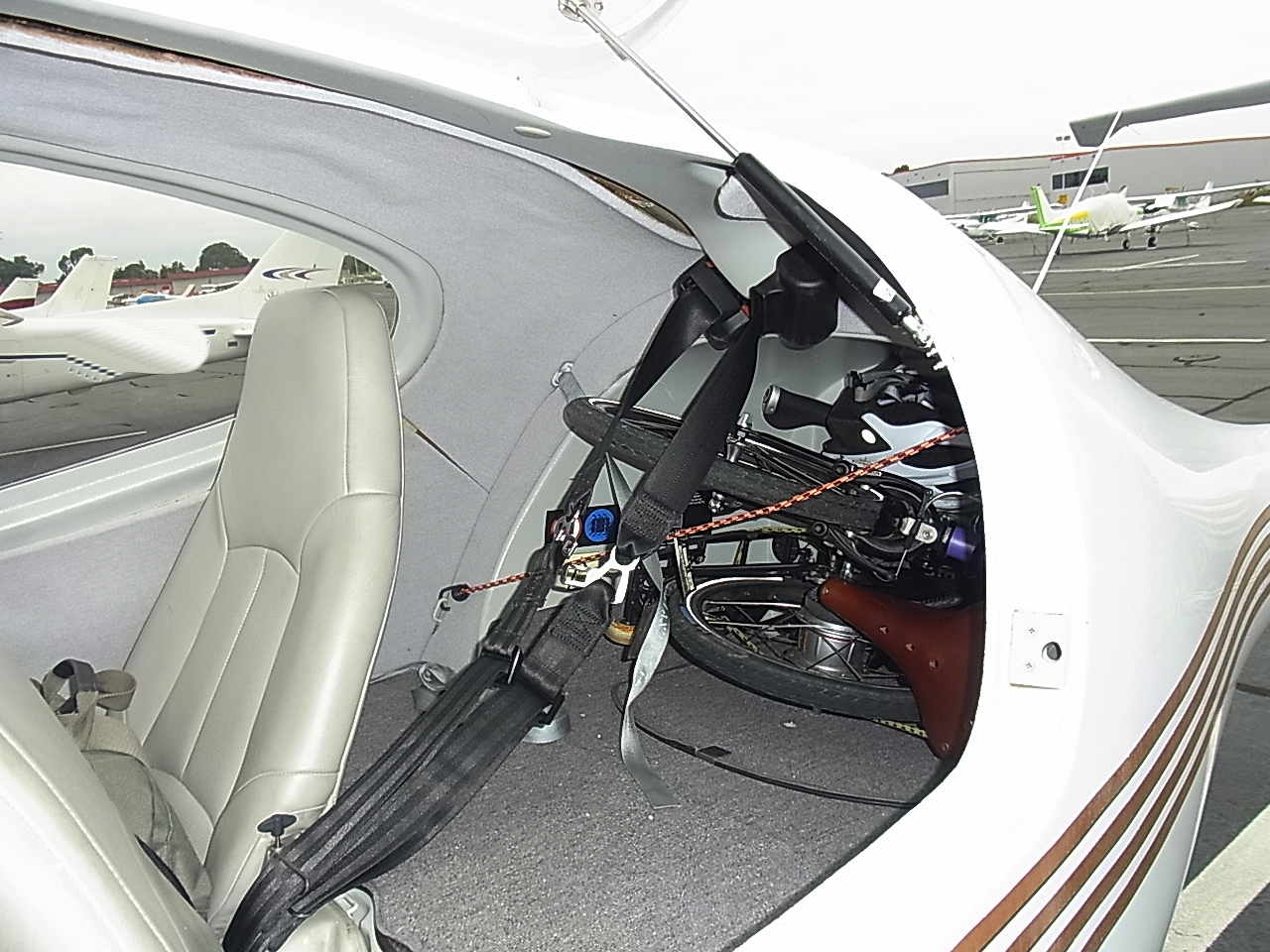
Tikit, secured in DA40 baggage area
Upon arrival, I discovered the rear fender had given up the ghost. The design is somewhat suspect: Two metal washers, sandwiched around a hole in the plastic fender, secure the rear of the fender to the Tikit's folding rack. A bit of pressure in the wrong place (such as when stuffing the bike into a cargo hold) and the plastic is broken. Luckily, I scrounged a bit of aviation safety wire from the kind folks at the FBO at Chester Rogers Field and managed a makeshift repair. With some pointers from the woman at the FBO, I elected to circumnavigate Lake Almanor starting out to the south.

No bubblegum required ...

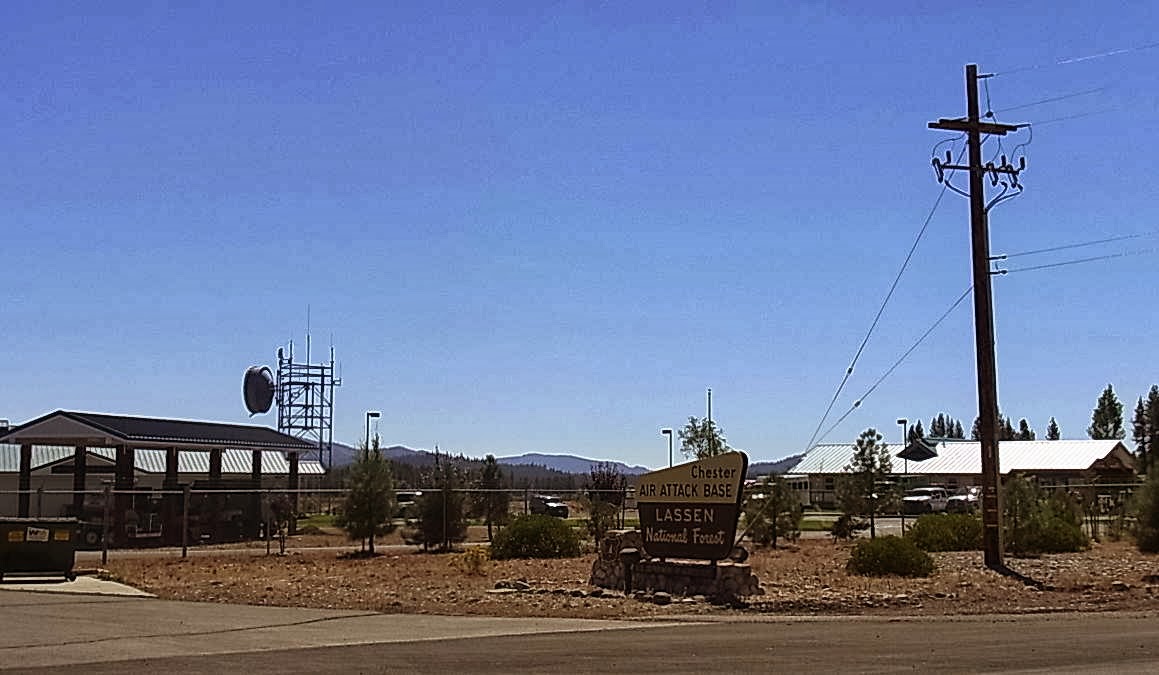
Air Attack Helicopter


Wide shoulder/bike lane


Empty Spillway
Minimal/no bike lane on the East/North side of the lake

Rolling hills, less shade on the north side of lake


Entering Chester, CA

Arriving in Chester, I stopped for a double espresso and a cookie at the Coffee Station. Having had time to think about the routes I've cycled in SoCal, the California Central Coast, and now the northwest Sierra, the idea occurs to me that at some point I'd like to connect the dots. Cycling from the Bay Area to San Diego would be an interesting challenge. Of course, I'll need plenty of sandwiches, cheese, bananas, and of course, hardboiled eggs ...

Sunday, September 15, 2013

SoCal Cycling

Events conspired and I found myself visiting Southern California twice within a week's time. Ever aware of my cycling goal of logging 4,500 miles this year (currently just over 4000 miles) and the effect that traveling might have on my cycling routine, I again put my folding BikeFriday Tiki to good use. On the first trip I drove to San Diego. The second trip was an instructional flight in a DA40 with an overnight stay in Temecula. In both cases, I packed my Tiki and logged a few good rides.

We've driven to San Diego many times, but usually choose make it a humane, two-day trip via US 101 with an overnight stop on the Central Coast. This time I drove solo with our two Basenji, straight (pretty much) to San Diego in 10.5 hours with three minimal rest stops. It would have been 9.5 hours, but there was an hour delay on I-5 due to an accident involving a truck hauling what looked like tomatoes. Spending one hour to cover 2 miles didn't help my mood. Approaching the Gorman Pass, Waze decided it was best to route me through the Antelope Valley via the Pearblossom Highway to I-15 rather than through the LA basin. Towering cumulonimbus clouds loomed in the sky as we drove along the two-lane blacktop and a light rain began falling. My mood improved, at least until I hit Friday rush hour traffic near Riverside.

A tree grows in San Diego!

There are few areas of grass or dirt in the area surrounding the downtown San Diego hotel where we were staying and that had our dogs frustrated. Clearly they wanted to get their feet and their noses in contact with the earth, not cement, brick and asphalt. We walked four blocks before we found a park and they were much happier. It's amazing how we humans have become accustomed to paving over the natural world.


With a heat wave gripping SoCal, I decided to rise early the next morning and do a bike ride while the air was cool. Staying along the Pacific Ocean would help, so I researched various bike rides with GoogleMaps (really liking the new bike routing on the iPhone) before choosing a trip to Point Loma and the Cabrillo National Monument. There were plenty of cyclists and walkers on the trail near Harbor Drive. Most were friendly, save the competitive group of cyclists I encountered. One of them dismissively informed me that my Tikit was "a piece of crap." Whatever ... I still enjoyed the nice 18-mile loop, a good climb up Talbot Street, and the clear skies and the cool air. With great weather and stellar views, you just want to get out and move when you're in San Diego. It's no wonder so many of the residents are physically active and very, very fit.


View of Cabrillo, North Island NAS in the distance

Nice hill on Talbot Street
My wife joined us on the drive back and we did our usual overnight stop at Pismo Beach. The next morning we agreed I would cycle to San Luis Obispo and we'd meet up at one of our favorite breakfast stops, the Big Sky Cafe. GoogleMaps routed me through Price Canyon and the Edna Valley, a well-known wine region. Under overcast skies I found the bike lanes and paths were pretty good, though parts of the bike lane on Price Canyon Road were overgrown with weeds, forcing you to move into the vehicle lane to pass. I was unaware that there were oil rigs in Price Canyon. I first smelled, then saw the oil drilling facilities.


We enjoyed a good breakfast at the Big Sky Cafe and the rest of the drive home was made better by a bit of morning exercise.

The next morning after arriving home, I packed my Tikit into a DiamondStart DA40 for a trip to French Valley airport and an overnight stay in Temecula. I've decided that removing the left pedal makes it easier to pack the Tikit into any vehicle and carrying the appropriate allen wrench is easy enough.


The midday 8.5 mile ride from the French Valley airport to the hotel was hot and GoogleMaps decided to route me through some residential neighborhoods to avoid a main road that had high-speed traffic and a minimalist bike lane. In general, Temecula and Murrieta have good but fragmented bike infrastructure: Crossing I-15, for example, is a dicey affair because there are only a few roads that make the crossing and none that I found had any bike lanes or markings at all. I rode around Temecula that afternoon, but found it boring and dissatisfying. Maybe it was the heat or perhaps it was a spread-out town plan based on petroleum fueled transportation? If/when the zombie apocalypse comes, I fear towns like Temecula are not going to fare well. That night I walked around Old Town and had dinner in preparation for the next morning's ride: A trip to the nearby town of Fallbrook and back.


I got an early start and the air was pleasantly cool. GoogleMaps routed me to Fallbrook via Rainbow Canyon Road (the old Route 395). I had seen few cyclists in Temecula the day before, but I saw quite a few riding the roads outside of town. There were some good climbs along the way and plenty of nice scenery. The bike lanes were generally good, though the pavement was a bit rugged on parts of Rainbow Canyon Road.


Avocado Capital

After a 30-plus mile ride, I recuperated in air conditioned comfort at the hotel before checking out and heading back to the French Valley airport. Halfway to the airport, I took refuge from the midday heat at Jax Bicycle shop, where the staff kindly pumped up my tires and replenished my water bottle. I'll be doing more cycling on my Bike Friday Tikit soon, this time in the Sierra Mountains. More details as they become available ...