Showing posts with label belt-drive bike. Show all posts

Tuesday, September 24, 2013

Connect the Cycling Dots

A hectic schedule makes it hard to maintain two blogs and I'm the first to admit I've fallen a bit behind, so here's a bit of a hodgepodge of cycling stuff. I sometimes fear this blog is beginning sound like Mr. Pither, the cyclist attempting a tour of North Cornwall in an old Monty Python episode. If you find cycling stuff boring, you can skip the rest of this post and just watch the clip below.


Sport-Utility Bike

My Yuba Mundo continues to see a lot of use: Trips to the grocery, Costco runs, and the occasional trip to PetVet to stock up on dog food and supplies. It's surprising how often an SUB can alleviate the perceived need for driving a car. Less CO2 output and more exercise. Think about it ...


Sierra Cycling

A mountain flying instructional flight, combined with the pilot's need to attend a meeting, meant I had a three plus hours to myself. Once again, I packed my Bike Friday Tikit and did some cycling around Lake Almanor. 

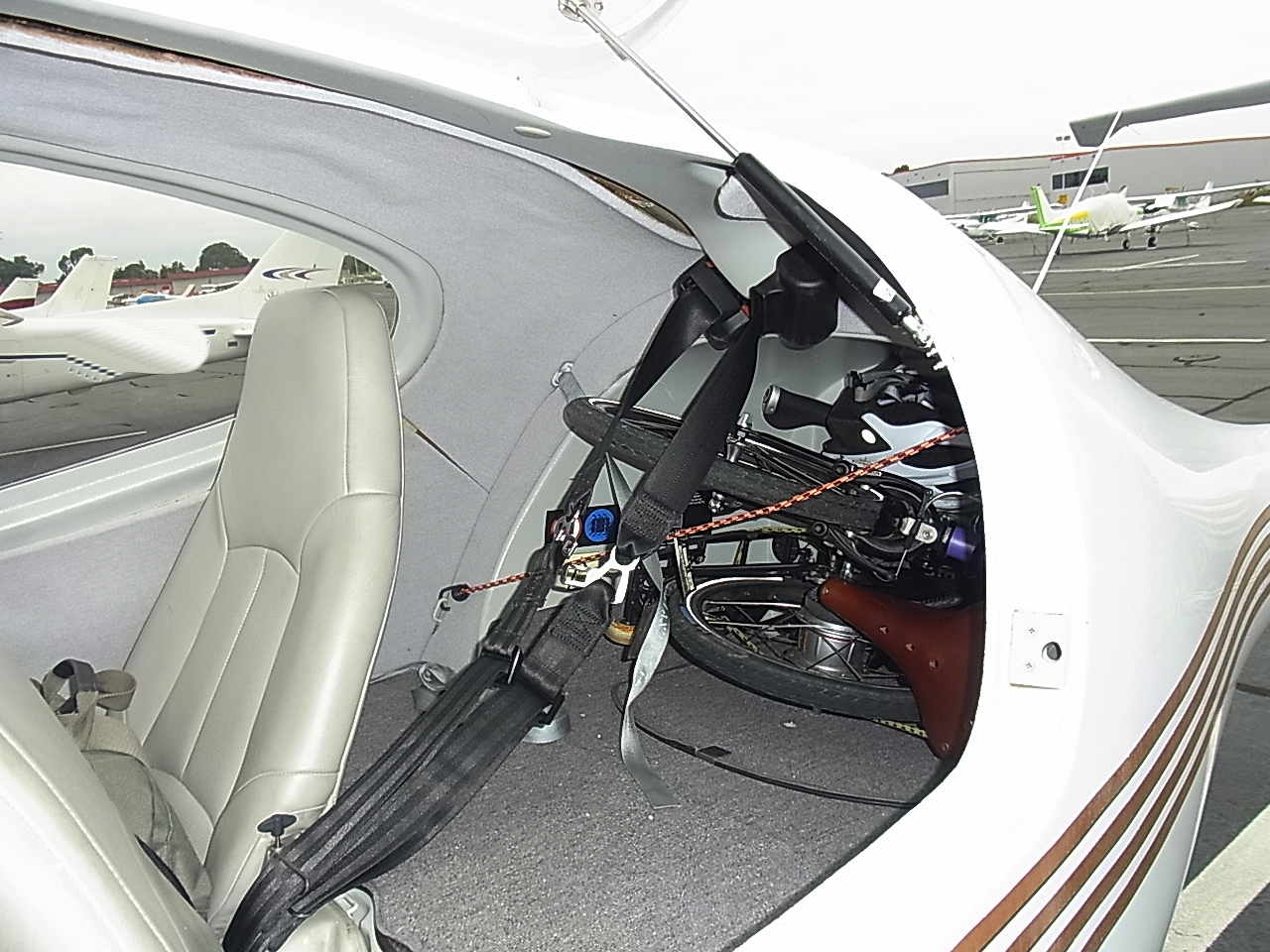
Tikit, secured in DA40 baggage area
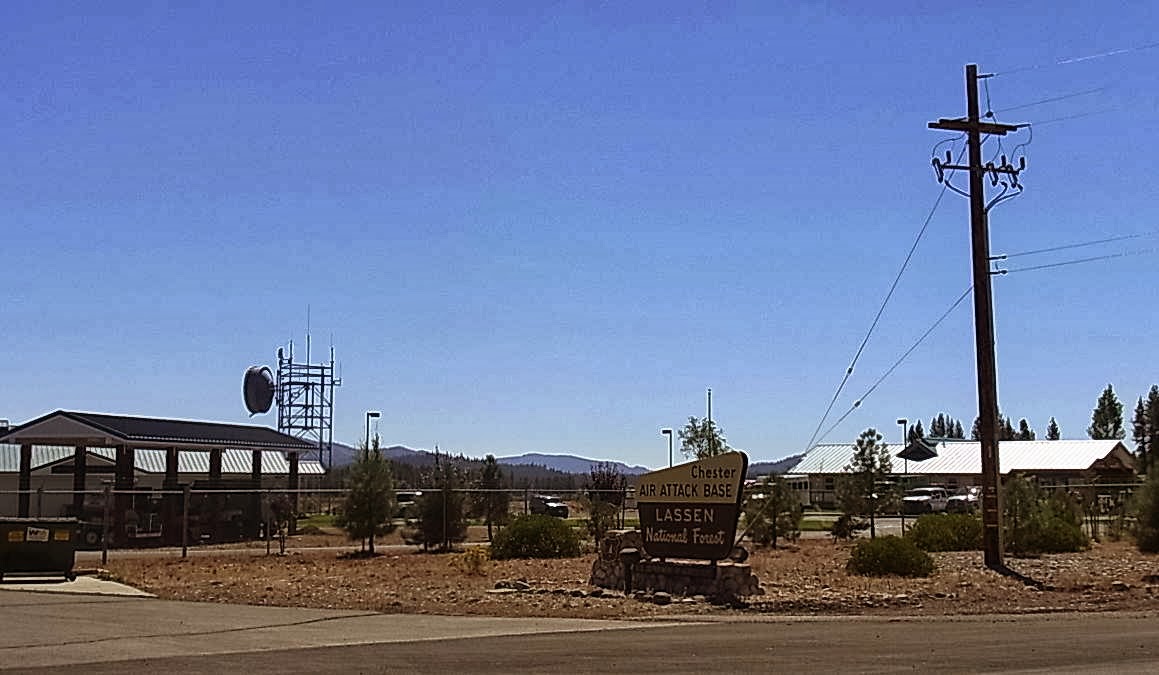
Upon arrival, I discovered the rear fender had given up the ghost. The design is somewhat suspect: Two metal washers, sandwiched around a hole in the plastic fender, secure the rear of the fender to the Tikit's folding rack. A bit of pressure in the wrong place (such as when stuffing the bike into a cargo hold) and the plastic is broken. Luckily, I scrounged a bit of aviation safety wire from the kind folks at the FBO at Chester Rogers Field and managed a makeshift repair. With some pointers from the woman at the FBO, I elected to circumnavigate Lake Almanor starting out to the south.

No bubblegum required ...

Air Attack Helicopter


Wide shoulder/bike lane


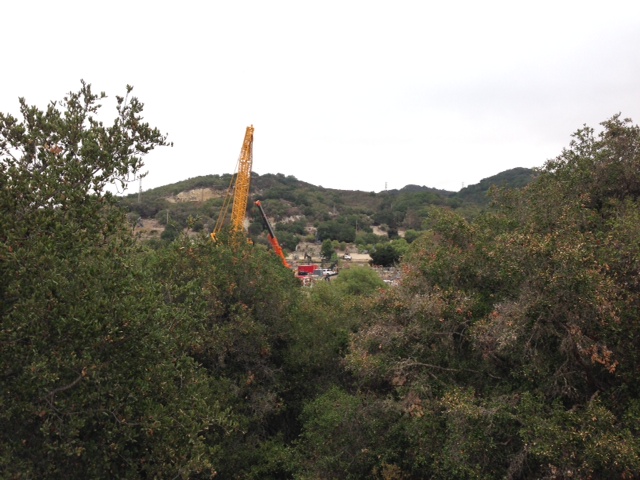
Empty Spillway
Minimal/no bike lane on the East/North side of the lake

Rolling hills, less shade on the north side of lake


Entering Chester, CA

Arriving in Chester, I stopped for a double espresso and a cookie at the Coffee Station. Having had time to think about the routes I've cycled in SoCal, the California Central Coast, and now the northwest Sierra, the idea occurs to me that at some point I'd like to connect the dots. Cycling from the Bay Area to San Diego would be an interesting challenge. Of course, I'll need plenty of sandwiches, cheese, bananas, and of course, hardboiled eggs ...

Sunday, September 15, 2013

SoCal Cycling

Events conspired and I found myself visiting Southern California twice within a week's time. Ever aware of my cycling goal of logging 4,500 miles this year (currently just over 4000 miles) and the effect that traveling might have on my cycling routine, I again put my folding BikeFriday Tiki to good use. On the first trip I drove to San Diego. The second trip was an instructional flight in a DA40 with an overnight stay in Temecula. In both cases, I packed my Tiki and logged a few good rides.

We've driven to San Diego many times, but usually choose make it a humane, two-day trip via US 101 with an overnight stop on the Central Coast. This time I drove solo with our two Basenji, straight (pretty much) to San Diego in 10.5 hours with three minimal rest stops. It would have been 9.5 hours, but there was an hour delay on I-5 due to an accident involving a truck hauling what looked like tomatoes. Spending one hour to cover 2 miles didn't help my mood. Approaching the Gorman Pass, Waze decided it was best to route me through the Antelope Valley via the Pearblossom Highway to I-15 rather than through the LA basin. Towering cumulonimbus clouds loomed in the sky as we drove along the two-lane blacktop and a light rain began falling. My mood improved, at least until I hit Friday rush hour traffic near Riverside.

A tree grows in San Diego!

There are few areas of grass or dirt in the area surrounding the downtown San Diego hotel where we were staying and that had our dogs frustrated. Clearly they wanted to get their feet and their noses in contact with the earth, not cement, brick and asphalt. We walked four blocks before we found a park and they were much happier. It's amazing how we humans have become accustomed to paving over the natural world.


With a heat wave gripping SoCal, I decided to rise early the next morning and do a bike ride while the air was cool. Staying along the Pacific Ocean would help, so I researched various bike rides with GoogleMaps (really liking the new bike routing on the iPhone) before choosing a trip to Point Loma and the Cabrillo National Monument. There were plenty of cyclists and walkers on the trail near Harbor Drive. Most were friendly, save the competitive group of cyclists I encountered. One of them dismissively informed me that my Tikit was "a piece of crap." Whatever ... I still enjoyed the nice 18-mile loop, a good climb up Talbot Street, and the clear skies and the cool air. With great weather and stellar views, you just want to get out and move when you're in San Diego. It's no wonder so many of the residents are physically active and very, very fit.


View of Cabrillo, North Island NAS in the distance

Nice hill on Talbot Street
My wife joined us on the drive back and we did our usual overnight stop at Pismo Beach. The next morning we agreed I would cycle to San Luis Obispo and we'd meet up at one of our favorite breakfast stops, the Big Sky Cafe. GoogleMaps routed me through Price Canyon and the Edna Valley, a well-known wine region. Under overcast skies I found the bike lanes and paths were pretty good, though parts of the bike lane on Price Canyon Road were overgrown with weeds, forcing you to move into the vehicle lane to pass. I was unaware that there were oil rigs in Price Canyon. I first smelled, then saw the oil drilling facilities.


We enjoyed a good breakfast at the Big Sky Cafe and the rest of the drive home was made better by a bit of morning exercise.

The next morning after arriving home, I packed my Tikit into a DiamondStart DA40 for a trip to French Valley airport and an overnight stay in Temecula. I've decided that removing the left pedal makes it easier to pack the Tikit into any vehicle and carrying the appropriate allen wrench is easy enough.


The midday 8.5 mile ride from the French Valley airport to the hotel was hot and GoogleMaps decided to route me through some residential neighborhoods to avoid a main road that had high-speed traffic and a minimalist bike lane. In general, Temecula and Murrieta have good but fragmented bike infrastructure: Crossing I-15, for example, is a dicey affair because there are only a few roads that make the crossing and none that I found had any bike lanes or markings at all. I rode around Temecula that afternoon, but found it boring and dissatisfying. Maybe it was the heat or perhaps it was a spread-out town plan based on petroleum fueled transportation? If/when the zombie apocalypse comes, I fear towns like Temecula are not going to fare well. That night I walked around Old Town and had dinner in preparation for the next morning's ride: A trip to the nearby town of Fallbrook and back.


I got an early start and the air was pleasantly cool. GoogleMaps routed me to Fallbrook via Rainbow Canyon Road (the old Route 395). I had seen few cyclists in Temecula the day before, but I saw quite a few riding the roads outside of town. There were some good climbs along the way and plenty of nice scenery. The bike lanes were generally good, though the pavement was a bit rugged on parts of Rainbow Canyon Road.


Avocado Capital

After a 30-plus mile ride, I recuperated in air conditioned comfort at the hotel before checking out and heading back to the French Valley airport. Halfway to the airport, I took refuge from the midday heat at Jax Bicycle shop, where the staff kindly pumped up my tires and replenished my water bottle. I'll be doing more cycling on my Bike Friday Tikit soon, this time in the Sierra Mountains. More details as they become available ...

Wednesday, September 4, 2013

Throwing off the Chain

After five thousand-plus miles of belt-drive bicycling, I wanted to share my experiences with a Rohloff equipped Proletariat (my primary commuter) and a Shimano Nexus equipped Bike Friday Tikit. Belt-drive technology and internally-geared hubs promise lower maintenance, quiet operation, flexible gear shifting, and freedom from oily/greasy chains. With a few caveats, I've found these advantages to be real and have been very pleased with belt-drive technology. I know there are many in the cycling community who have rejected internally-geared hubs (IGHs) in general and belt-drive bikes in particular. Whether or not the advantages of IGH/belt-drive will be realized for you depends on several factors. I'll start with my experience with the Bike Friday Tikit and conclude with the Rohloff-equipped Proletariat.

CDrive versus Gates

When I purchased the Bike Friday Tikit, I opted for lower-priced CDrive-equipped model and that was a mistake. The CDrive worked for a while, but after about 300 miles I found the belt slipping when pulling away from a stop in a slightly higher-than-normal gear. The belt "snubber" that held the belt firm against the rear pulley (meant to prevent this behavior) actually seemed to cause the belt to deteriorate. After 500 miles of use the, belt slippage became too annoying and I had the good folks at Cycle Monkey replace the CDrive with Gates Center Track pulleys and belt. Changing to the Gates components meant replacing the crankset, but I was able to re-purpose that crankset on my Prole. With the Gates equipment installed, the belt slipping stopped. If I had it to do over again, I would pony up the extra cash for the Gates belt-drive from the get-go.


Shimano Nexus

I originally had an 8-speed Alfine on my Prole and still have an 8-speed Nexus on the Tikit. My conclusion is that the Shimano 8-speed hubs (I have no experience with the 11-speed Shimano Alfine) are not ideal for belt-drive applications. Belts require tension and perhaps it is that force that causes Shimano's internally-geared hubs (IGHs) to make unhappy noises. And then there are occasional missed shifts, occasional slipped shifts, and the general feeling that things are not right. My theory? The Shimano design uses a large diameter roller bearing on the drive side and it isn't up to the stress that the belt tension produces. The Rohloff uses sealed bearings on both the drive and non-drive sides. A heavier, but more robust and reliable design.

I can live with these shortcomings on the Tikit for shorter, intermodal style transportation. I seldom ride the Tikit more than 8 or 10 miles at a time, but when I do ride farther the Shimano Nexus really starts to bug me. With the CDrive set-up, the ride characteristics became intolerable. With the Gates equipment and the Nexus, the Tikit is quite usable. I'd like to put a Rohloff on the Tikit, but will have to keep saving for that upgrade.

Proletariat, mit Rohloff

On the brighter side, my Rohloff-equipped Prole has turned out to be everything I hoped it would be. After over 4,000 miles of cycling pleasure, it is difficult to describe the Rohloff without using superlatives. The Rohloff SpeedHub is rock-solid, bullet-proof, solidly-engineered, confidence-inspiring, ultra-reliable. The Rohloff is more expensive than the Shimano IGHs, but it's in a totally different class.

Proletariat, with recently added drop bars

After a year, I experienced stripped axle threads on the non-drive side of the Rohloff caused by a slightly too-short axle for the Prole's thick dropouts. That was quickly fixed, under warranty.

I noticed after 300 miles or so of use that the belt would start to become a bit noisy, making a slight squeaking/whirring noise. To stop the noise, I had tweak the belt tension every 300 miles or so. The culprit turned out to be rear axle slippage in the horizontal dropouts. Reinstalling the original tensioning nut that I had removed from the drive side was the solution. If you have a frame with horizontal dropouts and are using a belt-drive, I suggest using a drive-side tensioned arrangement such as the Surly Tuggnut.


Another issue was the bearing seal on the drive side began to weep a small amount of oil after about 3,500 miles of use. Again, that problem was fixed under warranty and has not returned. The leak may have been caused by me running a bit too much tension on the belt. It took quite a while to clean the mess off of the Gates belt with mild soap and water!

Good Tension, Good Alignment

Many bike mechanics tension Gates belts solely by feel. I like the Gates iPhone App because it lets you set the tension by plucking the belt like a guitar string and reading the vibrational frequency. You'll need a quiet environment and a bit of patience. Avoid too much tension. I suspect that might lead to the aforementioned bearing seal problem.


I've also discovered that the rear wheel alignment needs to be pretty precise if you want quiet belt operation and consistent tension across the rotation of the belt and crankset. I currently tension the belt on my Prole to about 45Hz with good results.

Bicycling Unchained

What's the best part of having a well-maintained and properly-adjusted belt drive bike? Belt-drive bikes are uncannily quiet and smooth, especially with the Rohloff. Be sure you have a bell on your bike that you can ring as a courtesy to pedestrians who might not hear you approaching. When it comes to Rohloff versus Shimano, I've become a SpeedHub evangelist: The Rohloff is not just a little bit better, it's a whole lot better. You get what you pay for and in my book, the Rohloff Speedhub is worth the cost.

Thursday, March 14, 2013

Night Bike, Urban Bike

Even with the switch from daylight savings time, it was already dark and almost 9pm when I started my bike ride home through Alameda, Oakland, and Berkeley. It had been a long day, but given my bike's lighting system, there was little concern.  I'm not one of those ninja cyclists who dress in black and ride with minimal lighting. Given the late hour, spinning through the deserted streets of Alameda, thoughts of "What if someone tries to assault and/or rob me?" popped into my head, but no bogeymen appeared. Cruising along the Embarcadero, wedged between interstate 880 and the estuary that surrounds Coast Guard Island I heard the first distinct rumbling of the Amtrack Capitol Express. It was easy to hear, thanks to the whisper quiet belt drive on my Proletariat. The big engine would be paralleling the bike path on my right and the blasts from its horn began to shatter the cool night air.

I took my right hand off the handlebars to plug my right ear as the train began slowing for the highway construction and the Oak Street crossing. This meant I could pull ahead. The possibility of crossing the tracks at Harrison Street before the train signals and barriers could come into play became a distinct possibility. Escaping the train's blaring horn would be a fringe benefit. Before leaving work, I had the sense I might be catching a cold. I promised myself a leisurely ride home, but I couldn't help myself. I found my pedal cadence increasing. Possessed by a new goal, I had upshifted one gear and was now hauling ass. It was man against machine, David facing Goliath.

Looking over my right shoulder, I was clearly pulling ahead of the surreal beast. Three brilliant, blinding white lights, one of them sweeping like a search light in a circular pattern and behind the bright-as-day lights lurked the dark, menacing mass of thundering metal. Droning vibrations from the huge engine were being transmitted through the earth, along the pavement, through my bike's wheels, through the pedals, producing an odd tingling in the balls of my feet. The low, thundering rumble made the air in my lungs vibrate, but Goliath was losing, sliding further and further behind. A short downhill grade provided additional speed as I rounded the curve onto Harrison Street. The crossing signals began to sound and the gates lowered, but I was already through the crossing, my silhouette briefly illuminated by the dazzling lights. Wonder what the train's engineer thought of all this?

With the train three blocks behind me, I slid under the I-880 overpass, into downtown Oaktown. The streets here were mostly empty, too, save a few homeless souls, ranting to no one in particular. Following Telegraph Avenue into Berkeley seemed like the best choice, more heavily trafficked than Market or Adeline streets, more brightly lit than Mandala Parkway, more people, and probably safer. Telegraph was more lively and all of the traffic signals seemed to have been timed for little ol' me. A never-ending line of green lights, saluting at each intersection. Having vanquished the behemoth, my paced slowed. Several clubs with live music, booze and tattooed/pierced patrons spilling out and milling on the sidewalks appeared mirage-like on the periphery. They were a blur. I was focused on traffic, potholes, and the occasional shards of glass and strips of metal that appeared on the pavement ahead.

Veering off Telegraph Avenue onto the diagonal entrance to Shattuck Avenue, there were more cars but fewer people. Crossing Alcatraz, I glimpsed the unmistakeable flash of a bike's red LED tail light four blocks ahead. Another cyclist, another goal, my cadence increased again. Catching them didn't take long. A young woman with what, violin case strapped to her back? She nods as I pass and I utter a hoarse "'Evening." A quick jog over to Milvia Street, a designated bicycle boulevard. Now in my home territory, more relaxed, almost home. Twelve miles behind me, another four miles to go ...


Sunday, October 14, 2012

Rohloff Conversion

After putting about 1000 miles on my Stop Cycles Proletariat, I found myself really liking the Gates belt-drive but feeling a bit frustrated with the Alfine 8-speed internally geared hub. One issue was the Alfine was not as low-maintenance as I had hoped. I found myself having to re-lube the hub's internals every 300 - 400 miles (about once a month). Another issue was the feeling that if I pushed the Alfine too hard, it was going to let me down. Odd noises, occasional missed shifts and too few gears were also weighing on me. So I decided to investigate converting to a Rohloff Speedhub. Lucky for me, the sole US service partner for Rohloff, CycleMonkey/East Bay Bicycle Workshop (EBBW), is only a mile or so from my house. I visited their blog, saw the various bikes they've built or converted to the Rohloff and the Gates belt drive system, and knew I'd found the right guys. After an email exchange with Neil, the shop's owner, we had a plan in place.

The MonkeyBone replaces the ISO disc brake adapter and engages the Rohloff axle plate.

EBBW would build the Rohloff SpeedHub using a Velocity Dyad rim. The interesting part? With any internally-geared hub, the hub axle must be anchored to the frame to prevent it from turning. This can be done with a custom frame drop-out or a torque arm, but Neil's shop has another way for frames equipped with disc-brakes: The MonkeyBone. Turns out this solution works fine with the my Proletariat, but the rear disc diameter was reduced for 206mm to 160mm. Fine by me as the larger discs seem more susceptible to being knocked out of true in everyday use.


The Rohloff design philosophy differs significantly from the Shimano approach. For example, the Alfine cable connection, while lightweight, is ... well, flimsy. To my mind the single shift cable design contributes to much of the Alfine's missed shifts because there's a single cable acting against a spring. Rohloff on the other hand, uses a two cable design that provides positive shifting action. It's a bit heavier, but not as heavy as the doubt you feel when you're not sure if your hub will shift at a critical moment, threading your way through heavy traffic in downtown Oakland.


The Rohloff has 14 speeds, which is a big advantage over the 8 speed Alfine. Many times I found myself pedaling into a stiff headwind with the Alfine, shifting down, but finding I needed a gear in between what I had. With the Shimano you have two choices: Man (or Woman) up and go for the taller gear or slow down and accept the shorter gear. With the Rohloff, there seems to be a gear for every occasion.

About the only complaint with the Rohloff Speedhub, and it is a valid concern, is that it's expensive. A Speedhub will run you five to six times what you'd pay for a Alfine 8 and about three times the cost of an Alfine 11. Why would you want to pay that much? After you ride the Rohloff, I'll wager that you'll appreciate their solidly designed product is worth the extra expense and never want to go back.

What's so special about the Rohloff? It's hard to describe but easy to understand once you experienced the Rohloff in action. First, the Rohloff just feels bulletproof. Want to push it hard? Do you have quadriceps as big as Iowa hams that can generate lots of torque? Like to stand in the pedals up steep hills? Relax. The Rohloff appears to be able to handle whatever the rider can dish out. Missed shifts are a thing of the past as long as you slightly reduce pedal force right before shifting.

The Rohloff makes some noise, especially in 7th gear and lower (when the planetary gears come into play), but it's normal. When the Alfine makes noise, it seems abnormal and you get the feeling you're doing damage or something isn't right. In 8th gear and higher, the Rohloff is basically silent, especially with a Gates belt drive system.

The bottom line is the Rohloff costs more, but it is utterly reliable. Their motto is "No Slogans, Just Facts." And the fact is that Rohloff is the best internally-geared hub out there.

Sunday, April 22, 2012

Urban Attack Vehicle: Belt-Drive Proletariat


When I first saw a belt-drive bike it made a lot of sense to me: No chain, no oiling, no greasy mess, smooth and quiet operation. Belt-drive bikes rely on internaly-geared hubs which, by themselves, offer several advantages: Ease of shifting, completely contained from the elements, low maintenance, and simplicity of operation. These are all qualities every bike should have and it would seem the average person thinks so, too. The most common reaction from people who see my belt drive bike when I ride on BART is "Why don't all bikes have belts?" Why indeed.

I acquired my full-size belt-drive bike before my belt-drive Bike Friday Future Tikit and am therefore doing these reviews out of order, but there you go ...


I briefly considered modifying my existing Cannondale frame for a belt drive, but that would have involved cutting the frame's rear triangle since the belt is continuous and can't be opened the way a chain can. In retrospect, I'm glad I didn't try that route and just sold the Cannondale instead. A frame designed for belt-drive from the ground up is the way to go because precise alignment between the rear and front cogs is crucial. When things get out of alignment in a chain-drive, the chain just flexes. If things aren't aligned with a belt-drive, the belt may slip and that's B.A.D. Belt-drive bike frames also need to provide a mechanism to appropriately tension the belt, usually done with an eccentric bottom bracket arrangement or special dropouts on the rear of the frame.

Stop Cycles Proletariat with Gates Carbon Drive

Web research led me to Joe Bike, a brief and enlightening email exchange with store owner Joe Doebele, and shortly thereafter I took the plunge. The Stop Cycles Proletariat with an eight-speed Shimano Alfine hub and the Gates Carbon Drive belt system arrived via UPS within a couple of days and soon I had it assembled with my pedals of choice - Crank Brothers Egg Beaters.

Since receiving the Prole last October, I've added an Axiom Streamliner Disc rear rack and SKS P45 fenders. The rear rack lets me use the Ortleib Downtown pannier as my flight bag, holding my headset, iPad, and other essentials. While I wish the bag had more compartments, it is waterproof, quickly attaches/detaches from the rack, and has a nice shoulder strap. As for the fenders, some folks have complained than SKS P45 can't be installed on bikes with disc brakes. Some bending is required, but I beg to differ.

Front fender stays need some trimming and bending ...

Some creative bending of fender stays required to clear the caliper ...

These additions, combined with the beefy tires and excellent frame, make the Prole an ideal urban attack vehicle for the streets of the East Bay. Potholes, broken pavement, detritus in the bike lane? Fugetaboutit!

Having logged around 600 miles, I finally went for a ride with my wife and noticed something odd. Pedaling more slowly and lightly that I usually did, the Alfine hub was making weird sounds. If I pedaled harder (the way I normal would while commuting), the sounds went away. More web research led me to the very thorough hubstripping.com site and revealed such sounds are commonly reported by Alfine 8 owners. There are two approaches: Assume the sounds are normal and ignore them or give the Alfine 8 hub internals an oil bath. Shimano even has an oil made expressly for this purpose that runs between $80 and $120 per liter!

Some enterprising bike mechanics noted that Shimano's secret sauce bears a remarkable similarity to plain ol' synthetic automatic transmission fluid. Many Alfine 8 owners report that soaking the Alfine 8 internals in synthetic ATF every 800 to 1000 miles makes the funny sounds and occasional shifting hiccups disappear, so I decided to give it a try. After removing the rear wheel, this was the disassembly sequence. Don't try this procedure yourself unless you have the requisite skills and tools. If you do something dumb or break something, you were warned and don't blame me.

Removing my brake rotor required a spline tool, yours may be different.
Loosening the retaining nut to remove the rotor.

Removing cone bearing - requires 16mm cone and 18mm open end wrench

After turning wheel over to the drive side, removing C-clip (expansion pliers make this A LOT easier).

Removing the Gates belt cog.

Prying off the dust cover.

Loosening the case on the drive side with a strap wrench - LEFT-HAND (clockwise to loosen) THREAD!
Carefully opening the drive side
In a CLEAN working environment, carefully remove the innards.
Sloshing/soaking for a few minutes in synthetic ATF (modified soda bottle works nicely).

I did not do any disassembly of the internals of the Alfine 8 - I just sloshed and soaked for a few minutes, allowed the excess fluid to drain, then greased the bearing races and reassembled. My results with the ATF bath have been quite good: Shifting was noticeably smoother and the odd noises disappeared. Having ridden 50 miles since this service the shifting is still buttery smooth and the hub is still quiet. Time will tell, but it appears my Alfine 8 is good to go for another at least 800 to 1000 miles.