Sunday, November 24, 2013

In Praise of the Bell

There are unfortunate trends in bicycling such as wearing dark clothing, cycling at night without lights and without a helmet, riding on the wrong side of road, and rude disregard for traffic laws, but few are as disturbing as cyclists who eschew the use of a bicycle bell. Some cyclists may feel that having a bell on their bike is emasculating or childish, but that's simply not true. Bike bells come in a dizzying array of sizes, shapes and timbre and more cyclists should be using them because bells are powerful.

StVZO required equipment

Bikes and pedestrians often share pathways in European countries and they have bicycle regulations requiring bicycles have certain equipment. In Germany the Straßenverkehrszulassungsordnung, or road traffic permit regulations, requires certain equipment, including a helltönenden klingel or high-toned bell. In the US, bicycle regulations vary from state to state. Compared to the StVZO, California doesn't require much bicycle equipment at all. And California law does not require a bicycle bell.

  • Helmet for persons under 18 years of age
  • Handlebars
  • An attached seat
  • For Night Riding
    • White headlamp, attached to the bicycle or your body
    • Red rear reflector
    • White or yellow reflectors on front and back of each pedal
    • White or yellow reflectors usually mounted on wheel spokes
    • If you have tires front and rear with reflecting sidewalls you do not need side reflectors

What is so important about a bell? When riding on multi-use paths or in the city, ringing a bell to alert pedestrians and other cyclist to your presence is good etiquette. Okay, many people young and old can barely spell etiquette and even fewer know what it means, but the power of a tiny bell can change all that.


With a bell, there's no need to yell "passing on your left" or "heads up" or "haul ass!" Instead, you let the sound of the bell speak for you. The pleasant, ringing isn't at all like a honking horn and carries few of the negative connotations. The bell says, politely, "I'm behind you and would like to pass." With more bike bells in the US, more Americans would remember or come to understand what the sound means. With more bike bells, Americans could become more cooperative and less contentious. If you don't have a bell on your bike, why not get one and start a re-evolution?


Monday, November 18, 2013

Funny Symbols on Pavement

Struggling through the latter stages of a cold, I went for an easy bike ride that led to an unexpected encounter with an irate, shouting driver. My transgression apparently was choosing to use the rightmost lane of Northbound Buchanan Street in Albany that was recently marked with sharrows rather than use the crowded multi-use path that parallels Buchanan. Why I chose to use the road rather than the path may not have been obvious to a non-cyclist, but the driver's indignation was anything but subtle. Cutting to the core of these sorts of encounters requires that we recognize the auto-centric nature of our transportation system.

Most states have laws that give pedestrians and bicycles specific rights to access our nation's roads. Some portions of the interstate system even allow bikes limited access in order to bridge gaps in cycling infrastructure. Yet drivers, including the person I encountered, assume that motorized vehicles have priority over pedestrians, and bicycles.

Markings and signs that alert drivers to the presence and rights of bicyclists and pedestrians can help educate the non-cycling driver, but these don't always work. In my case, perhaps the pavement markings were too subtle for the driver in question or maybe he didn't know the markings mean bikes can share the lane with cars. For many drivers, greater mass and speed are all that matter: Might makes right.

If there's any doubt about our automobile obsession, consider the virtual absence of criminal prosecution of drivers who collide with and injure or kill pedestrians and bicyclists in many of our major cities. A recent New York Times opinion piece pointed out that if you want to kill someone without any criminal repercussions, just run over them with your car while they are walking or riding a bike. If you are not under the influence of alcohol and you don't flee the scene, you'll probably walk away without any charges. In Holland, a driver who collides with a bicyclist is assumed to be at fault unless it can be proven otherwise. Maybe explains why you're 5 times less likely to be hit by a car while cycling in Holland than in the US.

Do cyclists make overweight drivers feel angry and do these drivers then lash out at cyclists for their own lack of fitness? Or is it that we're trying to do too much, or we're late getting the kids to school, or we need to stop at the dry cleaners before heading to work, or we overslept and are in a bad mood Maybe we're stuck in heavy traffic because everyone around us is trying to get to the same concert, ball game, or celebration. These interrupted intentions create stress and often lead us to do and say things that we're later ashamed of, or at least should be ashamed of. So take a deep breath, try to get the big picture, and don't do anything stupid. To that end, enjoy this informative and clever video on ... sharrows!


Tuesday, November 5, 2013

TTCBCOAB, the Door Lane, and Seeing the Light

I work Saturdays, so weekends tend to be busy. Cramming all the chores into Sunday (and sometimes Monday) is a challenge, especially without using a car. Or is it? By riding a bike, parking is certainly easier. It's possible to (carefully) scoot past a long line of cars queued up at a stop sign or stop light. You arrive at your destination invigorated and in a better mood. And most importantly, you naturally avoid trying to do too much, getting in a rush, and becoming impatient with others. Perhaps life on a bike is generally better than life in a car.
TTCBCOAB #61, Four bags of groceries, new bike clothes
TTCBCOAB #62, Case of canned dog food, bag of kibble, biscuits
TTCBCOAB #63, Raised veggie bed fencing, donated by a friend
Bike Lane or Door Lane

Oakland, Berkeley, Alameda and other East Bay cities continue to add new facilities for cyclists. One of the easiest things cities can do is add sharrows: Pavement markings that alert drivers to the presence of bikes. Sometimes signs are added to remind drivers that bicycles may use an entire lane of traffic. In Oakland, several bike lanes are being augmented with a green stripe painted on the pavement to make the bike area clearer. This is good stuff, but there are complications.

Often the "sharrows"  and the green stripes are positioned to the right of the center of the lane, putting cyclists close to a row of parallel-parked cars. How much distance is required for a cyclist to avoid hitting a car door that is suddenly thrown open? After watching these two videos, you may think twice about assuming 3 feet of separation from parked cars is sufficient to "avoid the door." A word of warning, the second video is pretty startling.


Seeing the Light

One strategy for avoiding car doors and accidents in general is to use a flashing headlight, even during daylight hours. My commuter bike's dynamo-powered front and rear lights are on anytime my bike's wheels are turning, day or night. I supplement these steady-burning lights with flashing lights, front and rear. Countless times, the flashing front light has alerted drivers who were about to open their car doors and saved me from certain harm. And at least once a week, a pedestrian, driver, or another cyclist informs me "Hey, your lights are on!" My response varies from day-to-day, usually just a polite "Thank you," unless the person pointing it out is another cyclist. In that case I point out, "Hey, you don't have any lights!"


It may be very un-hip, but wearing bright colors like a florescent green, orange, or pink vest or jacket when riding is an easy way to reduce the risks associated with cycling. NHTSA and CDC have some good information on cycling safely and they both emphasize the importance of being visible.

So reducing cycling risks really be boiled down to four basic principles:

  1. Wear a helmet
  2. Be visible by using flashing lights and wearing bright clothing
  3. Ride predictably and courteously
  4. Stay alert and expect the unexpected

Friday, November 1, 2013

In Concord California, the Last 2 Miles may be Your Last

A classic transportation problem in the US is that a carpool, ride share, casual carpool, ferry, bus, train, tram, or light rail gets you close to your destination, but you often need to travel another two miles to get where you're going. That's why I've considered using my folding bike in combination with BART to make my way to the Concord Buchanan Airport. Yesterday I needed to ferry a aircraft from Concord to Hayward, so I decided to hop on my Bike Friday Tikit and let the adventure begin. I didn't know how much adventure was in store.

Bike Route from Google Maps

After riding to a BART station in Berkeley and changing trains at MacArthur, I found myself at the Concord BART station. It's only 2.2 miles from the Concord BART to the Sterling Aviation, where I needed to go. You could make this trip in a taxi for about $20. Or you could walk this route in about 40 minutes. Cycling is usually 3 to 4 times faster than walking: You can cycle this route in 10 or 12 minutes. Looking at the map, this looks like a simple and quick trip. Quick, yes. Simple, not so much.

I've ridden my Tikit in a lot of different places including San Francisco, Oakland, Seattle, San Diego, and numerous small towns in the Sierra Madre, the California Central Coast, and the San Joaquin Valley. Based on this route, Concord California strikes me as one of the least cycling-friendly city I've ever visited. On the route I cycled there were no sharrows, no bike lanes, and lots of large, fast-moving SUVs and trucks. I didn't see any other bikes on the route I traveled. And it's no wonder.

About a year and a half ago, a 17 year old, driving a 3 ton Cadillac Escalade, struck three cyclists, killing a man and his 9 year old daughter and injuring his 12 year old daughter. This happened on Treat Boulevard, about a mile south of the route I rode on Concord Avenue. The driver was changed with vehicular manslaughter and was reportedly speeding and making sudden lane changes.

This tragic accident was a wakeup call for the Concord City government. For a while it seemed that some changes would be made to make cycling safer in Concord. Maybe some changes are in the works, but based on my experience today, I'd say the City of Concord has a lot more work to do. Concord has numerous bike routes, like the Iron Horse Trail, but the biking infrastructure remains fragmented and seems designed primarily for recreation. Concord Avenue, Monument Boulevard, and Willow Pass Road all need bike lanes if cyclists are actually to use their bikes for transportation.

With more biking infrastructure, more people in Concord would be willing ride their bikes for transportation, drivers would come to expect seeing cyclists, and the transportation landscape would change. Until that happens, should I find the need to cycle from BART to the Concord Buchanan Airport, I'll probably ride on the sidewalk.

Friday, October 25, 2013

Changing Seasons

The weather lately in Northern California has been kind to those of us who don't want to face the fact that summer is over. Even as each day grows noticeably shorter than the last, even as I find myself cycle commuting home in the dark, there's still a trace of denial. Wearing shorts into the heart of autumn in Northern California is a gamble: You may be comfortable or you might just find it too darned cold and damp. It all depends on the vagaries of the weather systems over the Pacific. Almost to the end of October, there's no denying it now: We're well on our way to winter.

I subscribe to the notion that there's no such thing as poor cycling weather, only poor preparation. Reluctantly, the woolen leg and arm warmers have been taken out of storage, along with heavier woolen socks. Wearing the right clothes certainly helps deal with darkness and chilliness, but acquiring the mental attitude toward winter cycling is what matters most. You don't need to enter a state of denial or embrace severity and deprivation, but it is helpful to find a way to actually enjoy cold weather riding.

Cycling home on Doolittle Road at 8pm the other night, the still waters of the San Leandro Bay were mesmerizing. The Oakland A's were playing some team or another and overcast skies reflected the lights of the Oakland Coliseum, transforming them into a soft orange glow. The Oakland city center was visible in the background and despite the chill, the visual effect was of being inside a peaceful cocoon.  Then a UPS semi-truck blasted past me and shattered the moment. At least it wasn't raining ...

We already experienced an unseasonably wet weekend a month or so ago. It was dry when I awoke for my early morning bike commute so I packed some light-weight rain gear and decided to give it a go. There was a headwind on the ride in. Winds out of the Southwest usually signal rain for the Bay Area. My first and only lesson of the day was limited to flying touch-and-goes in the pattern at Oakland. We accomplished five takeoffs and landings before the rain reduced the visibility and forced us to terminate. I hung around the airport, waiting for the front to pass. When the rain subsided, I began the trip home only to be caught in a couple of downpours. Remembering that this sort of riding is mostly a mental game, I took solace in the wise words of a former student named Allan: "You reach an age where that which does not kill you comes damn close ..."

The main challenges of winter cycling are shorter days, night rides home, and cold, damp air. Having grown up in the Midwest and endured several blizzards, I know the temperatures in the Bay Area are relatively warm. What makes 40 degrees feel so bone-chillingly cold is the high relative humidity. So I look for distractions from the discomfort. Like spotting the dim outline of a family of raccoons crossing the street in front of me with an ungainly, ghoulish gait. Or the sight of a mother deer and her fawn, standing still in the shadowy darkness of a North Berkeley front lawn, waiting for me to pass.

As December approaches, know that the nights will become colder. Know that rainy weather will envelope Northern California. And know that dedicated cyclists everywhere will adapt and endure. If on some stormy, wet night, you see a cyclist, clad in rain gear, bicycle lit up like a Christmas tree, inexorably making their way through the streets of San Leandro, Alameda, Oakland or Berkeley, well that could very well be me. But don't despair. It's quite possible that I'm actually enjoying a nice winter ride home.

Monday, October 21, 2013

Avoid, Shift, Improve: CO2e and the Bike Commuter


Having already reached my goal of 4500 miles of commuter cycling for the year, I raised the bar to 5500 miles (6000 miles if you listen to the goading of my friend Todd). Looking back, I began to wonder about the differences in CO2e (CO2 emissions) for the 4500 miles of cycling versus 4500 miles of driving. A little web research uncovered this study from the European Cycling Federation (ECF) - Cycle more Often 2 cool down the planet: Quantifying CO2 savings of Cycling. Released in November of 2011, this guide attempts account for all the CO2e involved in transportation by bicycle and by car. This includes not just the emissions involved daily use, but also those that result from producing and maintaining automobiles and bikes. The study also attempts to account for CO2e related to the production of food that cyclists must consume to fuel their cycling. Though this study focuses on the EU (European Union), it is nevertheless an interesting read and can be used to make broad assumptions about CO2e in the US. And it helped to estimate just how much CO2e I had contributed by cycling 4500 miles (7200 km).

When considering GHG (greenhouse gas) emissions, the study estimates the amount of raw materials in the average bike, assumes a lifetime of 8 years, and a distance traveled of about 2400 km per year to arrive at 5 grams CO2e/km. The authors assume the average cyclist weighs 70 kg (155 lbs), travels at 16 kph (10 mph), and burns about 4 kilocalories per kilogram per hour. There are various ways to try to determine the GHG  emissions related to a cyclist's diet, but that depends on the cyclist's diet because some foods (like meat) require more energy to produce. In the end, the study concludes that cycling contributes 21grams CO2e/km. The average car contributes 271 grams CO2e/km. If you're not particularly fit physically, consider that electric-powered/assisted bicycles have an estimated CO2e of just 22 grams/km.

I weigh 78 kg (about 172 pounds) and average about 26 kph (16 MPH) on my bike commute, so I probably generate slightly more than 21grams CO2e/km. With all my gear, my bike is close to the 19.9 kg (44 pounds) assumed in the study, but I cycle considerably more per year. So I assumed 22 grams CO2e/km and given that 4500 miles is 7242 kilometers, I generated about 329 kilograms CO2E (or 725 pounds). Driving that same distance would have generated about 1962 kilograms of CO2e (or 4326 pounds - just over 2 tons US). That's 6 times more CO2e for driving versus cycling. If you're thinking the discussion of CO2e and cycling falls into the category of "who cares?" consider that in the European Union (EU), about a quarter of all GHG are produced by transportation.

While there are similar statistics for the US, I've focused on the ECF's study for two reasons: One is that they have nicer, simpler graphics and two, the study shows how various strategies for increasing bicycling as transportation could help EU countries meet the stated CO2e goals for the year 2050. By contrast, the EPA's CO2e reduction strategies look decidedly disorganized and ineffectual. Just sayin' ...


The ECF study suggests three strategies that could be used independently or in combination to meet goals to reduce CO2e - Avoid travel, shift travel to public transportation and non-motorized transportation and improve the CO2e footprint for motorized transport, If you've been thinking there's nothing you can do to significantly reduce CO2e by cycling more and driving less, consider these graphics from the study.


Tuesday, September 24, 2013

Connect the Cycling Dots

A hectic schedule makes it hard to maintain two blogs and I'm the first to admit I've fallen a bit behind, so here's a bit of a hodgepodge of cycling stuff. I sometimes fear this blog is beginning sound like Mr. Pither, the cyclist attempting a tour of North Cornwall in an old Monty Python episode. If you find cycling stuff boring, you can skip the rest of this post and just watch the clip below.


Sport-Utility Bike

My Yuba Mundo continues to see a lot of use: Trips to the grocery, Costco runs, and the occasional trip to PetVet to stock up on dog food and supplies. It's surprising how often an SUB can alleviate the perceived need for driving a car. Less CO2 output and more exercise. Think about it ...


Sierra Cycling

A mountain flying instructional flight, combined with the pilot's need to attend a meeting, meant I had a three plus hours to myself. Once again, I packed my Bike Friday Tikit and did some cycling around Lake Almanor. 

Tikit, secured in DA40 baggage area
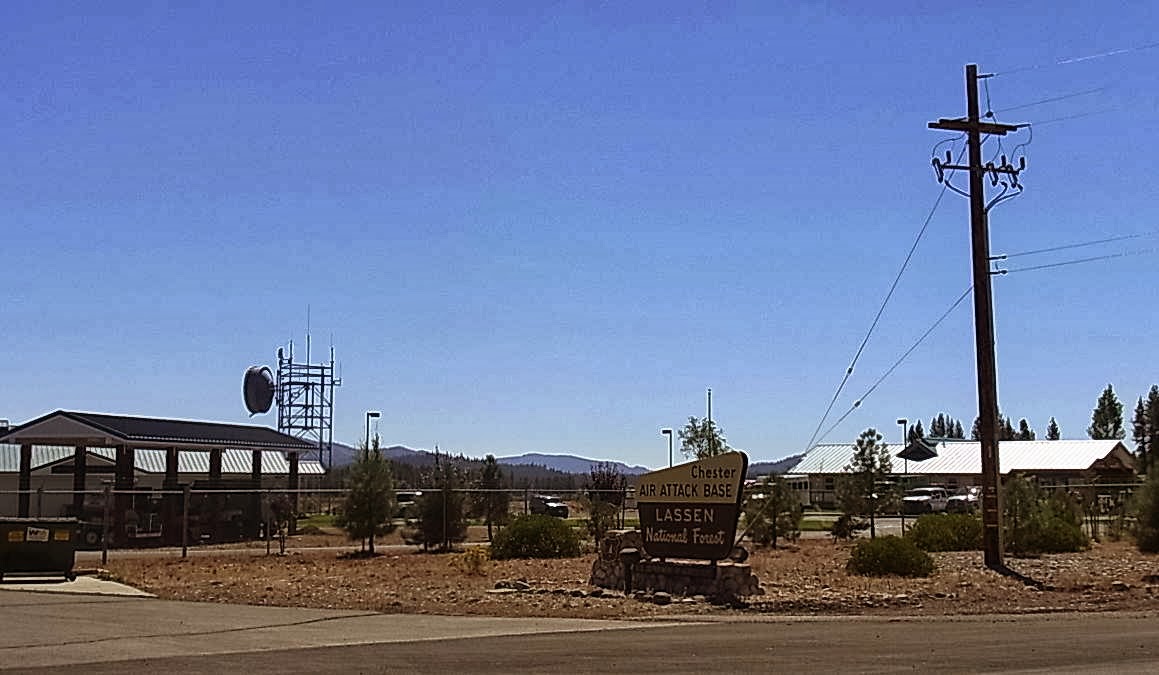
Upon arrival, I discovered the rear fender had given up the ghost. The design is somewhat suspect: Two metal washers, sandwiched around a hole in the plastic fender, secure the rear of the fender to the Tikit's folding rack. A bit of pressure in the wrong place (such as when stuffing the bike into a cargo hold) and the plastic is broken. Luckily, I scrounged a bit of aviation safety wire from the kind folks at the FBO at Chester Rogers Field and managed a makeshift repair. With some pointers from the woman at the FBO, I elected to circumnavigate Lake Almanor starting out to the south.

No bubblegum required ...

Air Attack Helicopter


Wide shoulder/bike lane


Empty Spillway
Minimal/no bike lane on the East/North side of the lake

Rolling hills, less shade on the north side of lake


Entering Chester, CA

Arriving in Chester, I stopped for a double espresso and a cookie at the Coffee Station. Having had time to think about the routes I've cycled in SoCal, the California Central Coast, and now the northwest Sierra, the idea occurs to me that at some point I'd like to connect the dots. Cycling from the Bay Area to San Diego would be an interesting challenge. Of course, I'll need plenty of sandwiches, cheese, bananas, and of course, hardboiled eggs ...